Disabled access in Britain’s streets, buildings and attractions (or the lack thereof) has made a real stir in the news this week, spearheaded by a recent BBC London Inside Out documentary. The investigation, using undercover researchers, revealed a “depressing” failure to accommodate disabled people on London’s high streets. This concerning news comes at a time when a glut of other statistics have surfaced showing how much there is to be done to make even the best adapted parts of the country more accessible and inclusive.
The investigation uncovered that poor disabled access is rife throughout London, including in some of the country’s biggest and best known chains. Researchers found unusable tables or ramps missing or broken at branches belonging to Itsu, Costa Coffee, Eat, Caffé Nero, Caffé Concerto, Chipotle and the Post Office. It’s never OK, but it’s closer to being excusable when a small independent shop, which may have more limited resources, doesn’t provide top notch access but for major outlets such as these it’s really not good enough.

This news comes on the back of statistics from Really Useful Stuff’s Missing Out consumer research (looking at supermarkets, banks, mobile phone retailers and estate agents) which asked less able people what they think about the current quality of access on our streets. It found that almost half (48%) of disabled people were dissatisfied with access to high street services in general. To make things more worrying, despite the common held view that ‘things are getting slowly better’, 65% respondents felt that there had been no improvement to disabled access in the past five years. If slowly means over a longer period than five years to some people, then they should note that 26% of people surveyed felt that access had actually got worse during this period.
As a response to the BBC documentary, government officials promised to write to the businesses – because that’s something that always gets things solved. We don’t think this is a strong reaction to such obvious neglect, but oddly we don’t mind too much because we think that the legislative route is ultimately not going to be the quickest way to improve the accessibility of the venues and services we want to use. Evidence that the governmental way may not be the quickest was apparent when we attended an All Party Parliamentary Group on access to the high streets and it was hosted in an upstairs rooms with narrow seating arrangements that people in wheelchair couldn’t use. It’s things like this that have caused us to focus on the economic argument for improved access. Legislation already exists but it’s too hard to enforce, so we believe the best thing to do is to explain to businesses how access can positively affect that which is most important to them – their bottom line.
The disabled pound (or blue pound, purple pound or whatever else you might want to call it) is big business and if there’s anyone who thinks they can afford to ignore it, they must be impossibly rich or very foolish. We’ve known for a long time that the annual spend of less able people is around £80 billion but new figures have recently shown that the tourism industry, as well as the high street, would benefit enormously from greater inclusivity.
New research by the domestic tourism board has shown that the overnight accessible tourism market is worth £3 billion to the England economy, with day visits bringing the figure up to £12.4 billion. On top of this, researchers at the University of Surrey have found that the European tourism sector is losing out on as much as €142 billion every year due to poor infrastructure, services and attitudes towards travelers with disabilities. If European destinations were fully accessible, demand could increase by up to 44% a year.
Antonella Correra, Policy Officer at the European Commission, commented: “Far from being a niche sector, accessible tourism is a huge market opportunity. The research provides clear evidence that accessible tourism services are also better services, that increase the visibility and reputation of tourism destinations, and give a competitive edge to operators.”
The benefits of improved accessibility should not be lost on anyone any longer and it is our firm belief that this is the best way to go about convincing businesses to be more accommodating. “Don’t do it from a moral viewpoint – do it because it makes good business sense,” Sophie Morgan – model, artist, TV presenter and friend of BBS – said to The Telegraph. “There are 11 million people in Britain with some form of disability – it’s a demographic that’s been overlooked for far too long. We also tend to travel in groups and will generally stay in accommodation longer – a dream for hoteliers.” We’d also add that, according to a new survey carried out by the organisers of Disabled Access Day, 93% of disabled people would revisit a venue that has good accessibility.

We’re convinced that businesses with good access can reap the benefits of the work they put in to be more inclusive, but they also need a way to display their inclusivity so that people kind find out about the good work they’ve done. It needs to be easier than it is for less able people to find out about access before they visit a venue. At the moment it’s far too difficult and unreliable. There needs to be a simple and easy to understand way to find out in advance of turning up on the doorstep. This is where we come in…
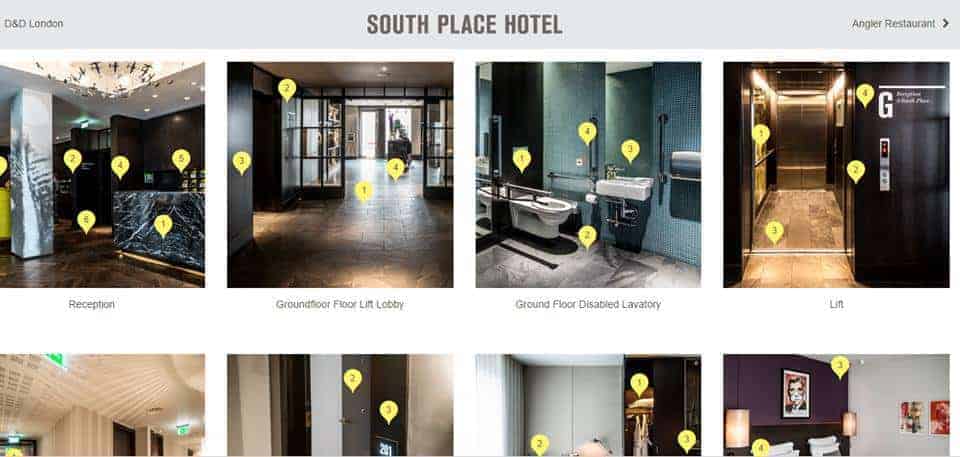
2013 AccessChamp research featuring 276 members of Disabled Motoring UK stated that 92.1% of less able visitors seek information online but only 16.8% feel that they can always get enough information about the facilities. Simply stating “wheelchair access” was not deemed to be sufficient for most. But if businesses were to use a BBS PAD (Pictorial Access Description) they would be able to display a detailed photographic guide of the access in their buildings.
We think that it’s essential these days for businesses with good access (particularly any businesses in the tourism and hospitality sectors) to advertise this on their websites. God knows that there are enough difficulties for less able people. At least we can take away the element of surprise by showing people what access to expect when they arrive at a given venue and we firmly believe that the PADs are the most effective way to do this. Any written compliance statement comes across as cold and compliant. On the other hand, PADs look great and are more user a friendly. After all, a picture’s worth a thousand words.