
In the past we’ve written about accessibility at festivals across the UK but we needed an update for 2016. So we’re grateful to friend of BBS, journalist Alex Taylor who writes for Metro.co.uk, who withstood the weather, the mud, the beer, to write this update on London festival Field Day, to assess their accessibility.
……………………………………………………………………………………………………
Over the past decade, Field Day has cemented its rise as one of the best London music festivals, consistently offering a diverse range of cutting edge acts.
But how does it fare if you have access needs?
The festival, hosted in Victoria Park and run by Eat Your Own Ears, states that it works hard to ensure fans with disabilities can fully enjoy the occasion. A longstanding, five-year partnership with live music access organisation Attitude is Everything (AiE), continues to further this ambition.

With this promise in mind, Blue Badge Style went along to find out if Field Day really is ready to top the accessibility bill.
Tickets
Many disabled people are put off applying for festival tickets for fear their needs will not be understood or catered for. And as AiE’s ‘Access starts Online’ campaign highlights, purchasing tickets can be far from easy.
Fortunately, this is not the case for Field Day, which, as with many festivals, now offer a 2 for 1 ticket scheme for those who require a personal assistant.
Although the widespread problem of needing to ring the ticket agencies (in this case Ticketmaster) to order an accessible ticket remains – frankly an unnecessary extra burden for disabled people in this modern age – the Field Day do offer support. As soon as the access team is made aware that a customer has difficulty using the phone, they immediately request that Ticketmaster make contact via email.
After purchasing a ticket, customers simply needed need to contact the access team, whose details are clearly listed on the website, with proof of disability and Ticketmaster purchase details, to receive the concessionary extra ticket.
Best of all, well ahead of the day, an Access Pack was also sent through containing all the information for those with disabilities, be they physical, visible, or invisible.
Everything takes more time as a wheelchair user, so the ability to forward plan with all the details at hand makes a huge difference.
Transport
Despite being the busiest city in the world, any disabled person will be able to tell you that transport access in London is far from perfect. Field Day organisers recognise this, and included the best accessible routes to the park in the Access Pack.
The festival access team equally made sure other bases were covered. New-age taxi behemoth Uber offered UberWAV specially-outfitted cars to wheelchair users for the same price as a normal UberX ride, redeemable via a special promotional code given to ticket holders with access needs
For those with their own transport, a blue badge car park was set up close to the park that was very easy to find.
Getting around
The heavy rain made life difficult for all involved, but the near torrential downpours did highlight the vital importance of the access efforts made by the organisers.
Special widened ticket lanes for wheelchair users quickened entry, a major plus in the conditions.
Once inside, the tarmac routes around Victoria Park proved a godsend. And, when there was no alternative but to trek over the grass, the comparatively small inner city scale of the site meant some firm patches could always be found. This is frequently not the case at larger festivals where the hordes churn the ground so badly that it is near impossible to navigate on wheels.
Access wardens were also on hand to help throughout the day, and proved more than happy to suggest alternative routes.
However, given the further rain on Sunday, some wooden panelling or chippings in the most rain affected areas would have made the battle easier for those with mobility or eyesight problems.
Viewing platforms
The festival took a number of measures to ensure music lovers with disabilities were able to enjoy the music at its fullest.
The key performance areas, from the main Eat Your Own Ears stage to the surrounding tent spaces, featured accessible viewing platforms. These were constantly patrolled by staff to ensure those without access requirements were not able to abuse the system.
The views from these platforms were advantageous, especially in the tents, where they were often located at the back, but still very much within the crowd.
However, one of the smaller stages did not have a platform – a strange omission and something that should definitely be fixed for next year.
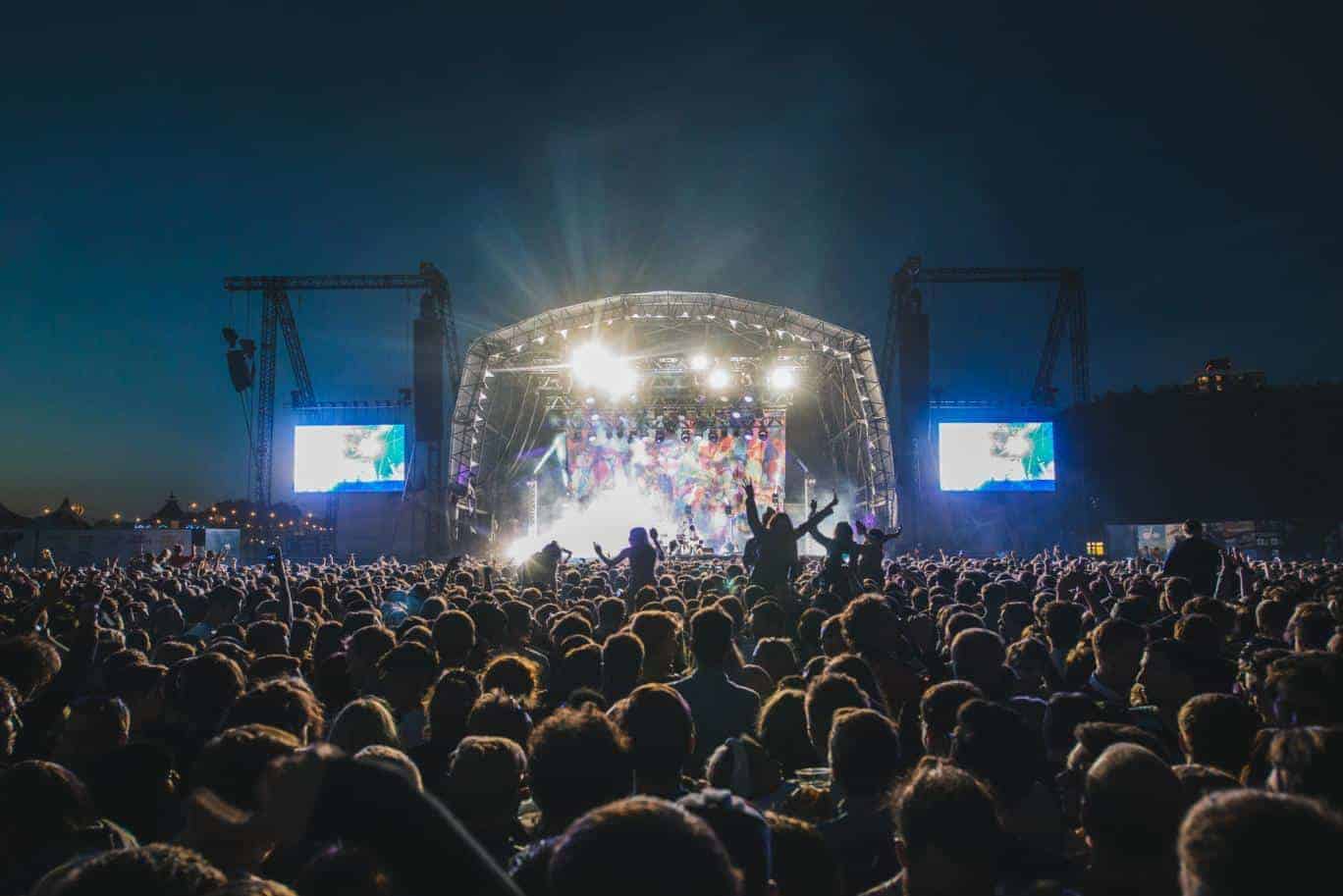
The main stage accessibility platform was located slightly to the side rather than centrally. While this ensured ease and safety of entry and exit, and did not affect the sound or viewing quality – it did feel slightly detached from the main throng of the crowd.
That said, not every festival-goer shares this writer’s love of being absolutely in the centre of everything. Given the wide variety of disabilities that need to be catered for, it is understandable that this compromise was made. Hearing loops were also available for attendees with hearing impairments.
Toilets
Each access platform also featured an accessible toilet – an invaluable feature for obvious reasons. The accessible port-a-loos at Field Day were particularly useful as they featured railings, a great help when trying to manoeuvre in such a confined space, either alone or with a personal assistant.
And, for those who prefer or need some time away from crowds, Field Day set aside a designated ‘Quiet Space’ to allow some relief from the action.
Bars
Possibly the most important aspect of the day! The site offered numerous lowered bars that were clearly visible and signposted both in the Access Pack and on-site. This extended to the VIP bar (where else would Blue Badge Style try and position itself!), a welcome sign of awareness that disability need not mean that exclusivity and luxury are an afterthought.
James Blake ‘Modern Soul’, Headlined on Saturday at Field Day 2016
Overall
It is clear Field Day is leading the way for the way London festivals should deliver integrated, comprehensive accessibility
The strong longstanding relationship that Eat Your Own Ears have built with AiE is making a huge difference. Signed to the charity’s Charter of Best Practice since 2011, the commitment has been pivotal in assuring access platforms, transport opportunities, and, most of all, an informed, aware environment. Access coordinator Scott Kennedy may take the lead, but it is an understanding that spreads throughout the entire festival team, underlined by the detail in the Access Pack.
Of course there are improvements that can be made. Incorporating access platforms across all stages is a must, as is wooden boarding in the event trench like conditions, but the mind-set, willing pro-active attitude to keep continuing improving is clear to see.
A weekend of great acts, without the need to camp, is always a winner, but when accessibility is made central to the event, it becomes unmissable for music lovers with disabilities. Roll on 2017!
Here’s a roundup of what happened…………….I’m there next year they get 3 BBS Ticks for style accessibility & facilities, Ed.