
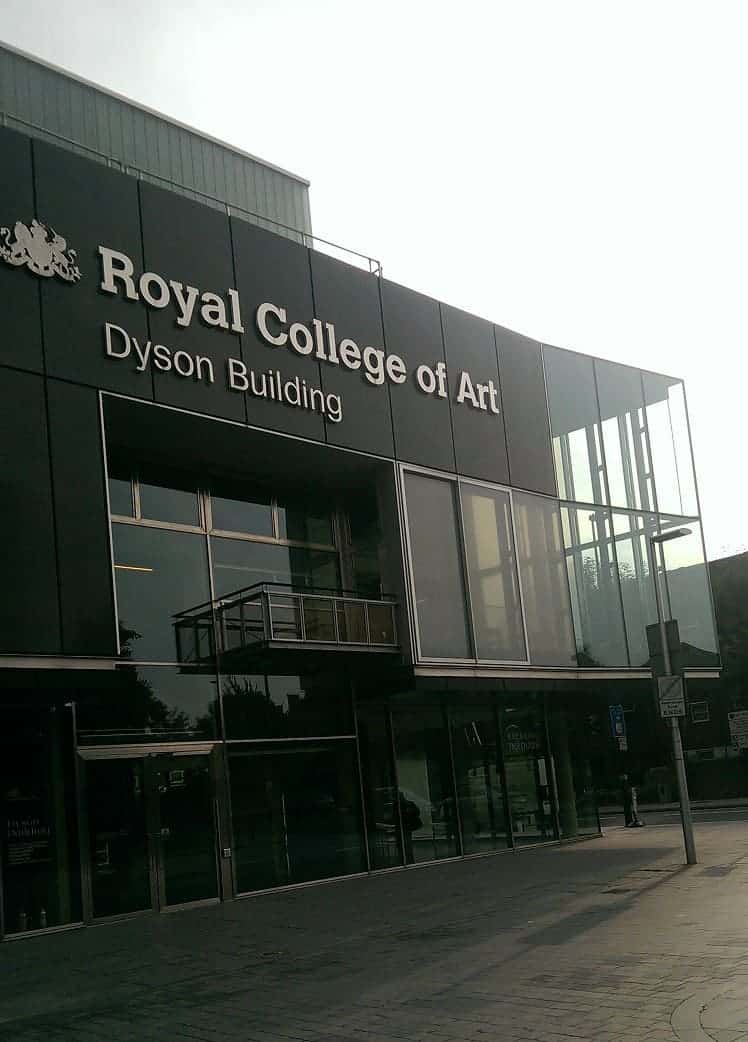
Last week’s Breaking Through exhibition, at the Dyson Building in Battersea, offered a chance to see some of the latest designs aimed at building towards a more inclusive future for less able and elder people. The exhibition explored how current research by the Helen Hamlyn Centre for Design at the Royal College of Art is translating into new products, services and systems – and breaking through to achieve impact in the market, public discourse and policymaking. It was a relatively short exhibition – both in terms of how long it was on display and the time it took to get around and see everything there – but it served up some interesting new developments in design to aid people with reduced mobility and other impairments.
The designs on display were varied and intended to tackle all kinds of problems (many of which you may not have thought need tackling) and were by no means all related to disability. With new standing up office cubicles to ideas for better ways to light classrooms, not all the exhibits were relating to disability or even necessarily particularly interesting. But there was certainly just enough on show to pique the interest of differently abled people.
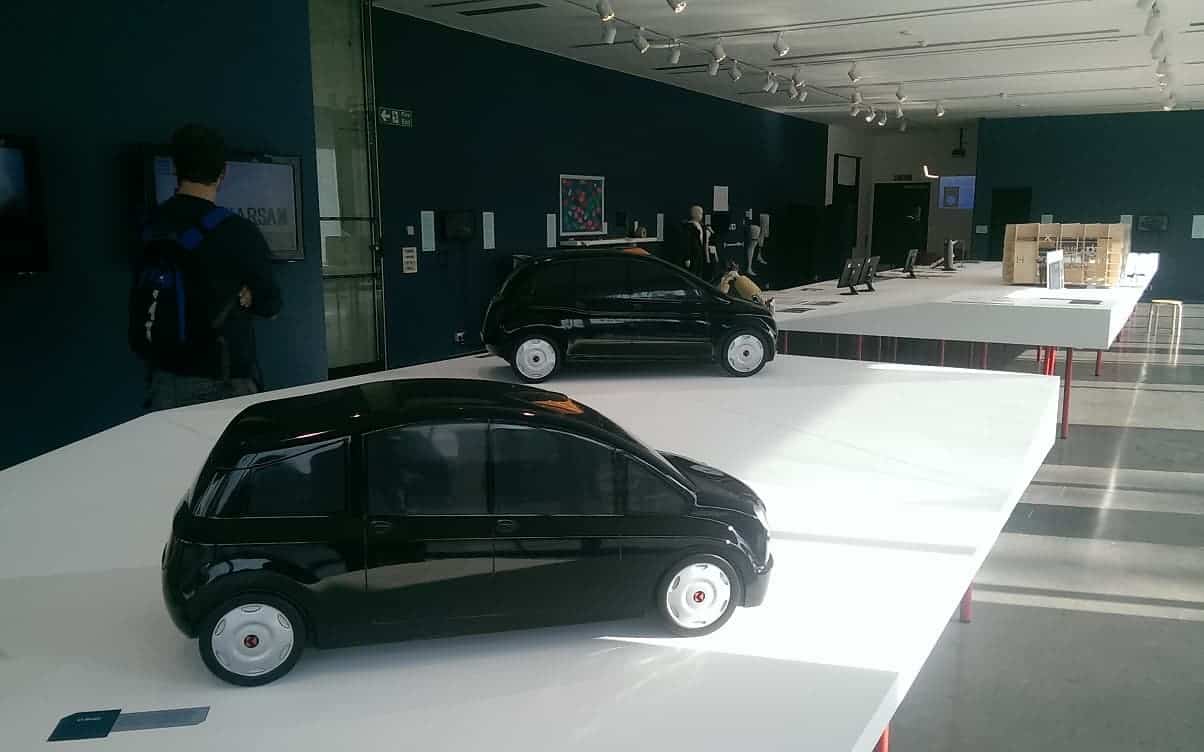
The main reason for our initial interest in Breaking Through was the new model of black cab on show – the Karsan Concept VI. RCA Vehicle Design and the Helen Hamlyn Centre for Design are working jointly on this major design project with Studio Hexagon and vehicle maker Karsan, both based in Turkey. The aim is to develop a low- emission London taxi that meets the needs and aspirations of drivers and passengers of all ages and abilities.
We had insider knowledge and interest as Fiona had been a small part of the design process so far, when she helped give advice on how best to make sure that wheelchair users can be safe and comfortable in the new design. The new model exhibited at the exhibition really was literally a new model – well, actually two new scale models which looked like rather large toys and weren’t particularly illuminating. There wasn’t much in the way of information on the taxis alongside these little mock-ups but there was enough to be satisfied that the accessibility aspect is being taken into consideration.
The access of the vehicles is intended to have some extra improvements on current cabs. For instance, the left hand side door is illuminated, for those with reduced vision, and is indicated by a rear window ‘getting out’ message for the benefit of cyclists, pedestrians and other vehicles. Wide dual doors open at 90 degrees, an automated wheelchair ramp can be deployed and wheelchairs can be accommodated so that they face other passengers. It looks good, but we didn’t ultimately learn much more than we previously knew. Hopefully, more detail will be forthcoming soon.
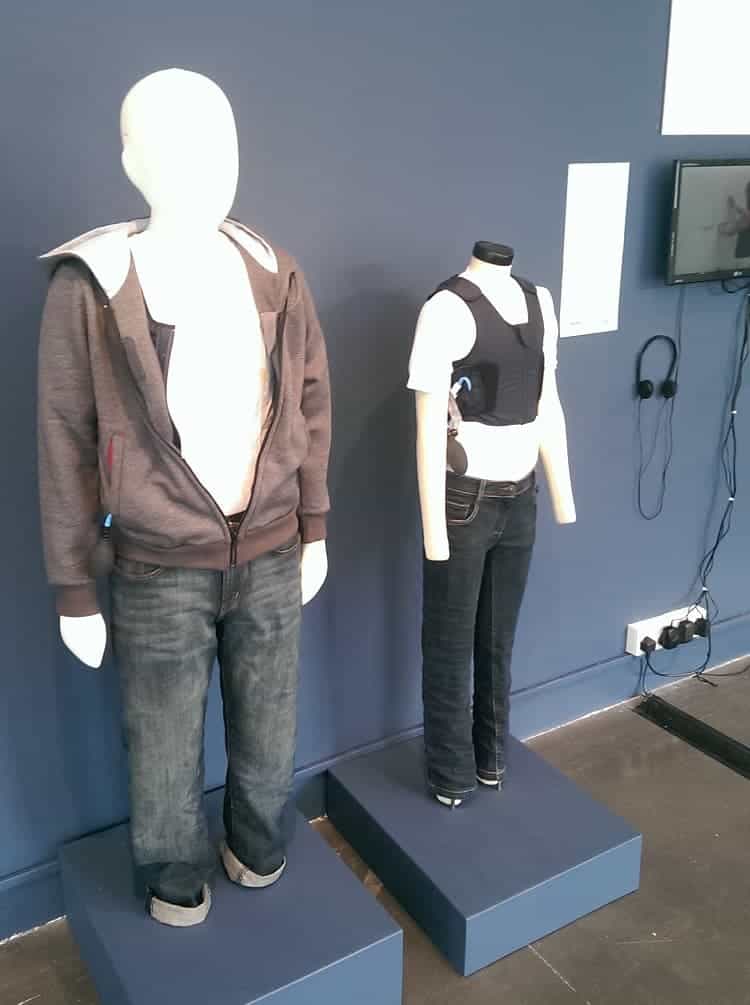
Although it was probably the biggest item on display and was something of a centrepiece for the exhibition, the taxi design wasn’t the only assistive design from the Helen Hamlyn Centre. For instance, the Squease Vest is an inflatable pressure vest designed for people who have difficulties processing sensory information, like people with autism, ADHD, sleeping or anxiety disorders. The vest gives a comfortable hug-like pressure, helping you to cope with stress and sensory overload, avoid meltdowns, improve concentration or fall asleep quicker. They’re immensely helpful and can be discretely hidden in one of their hoodies if any users would prefer to do so.
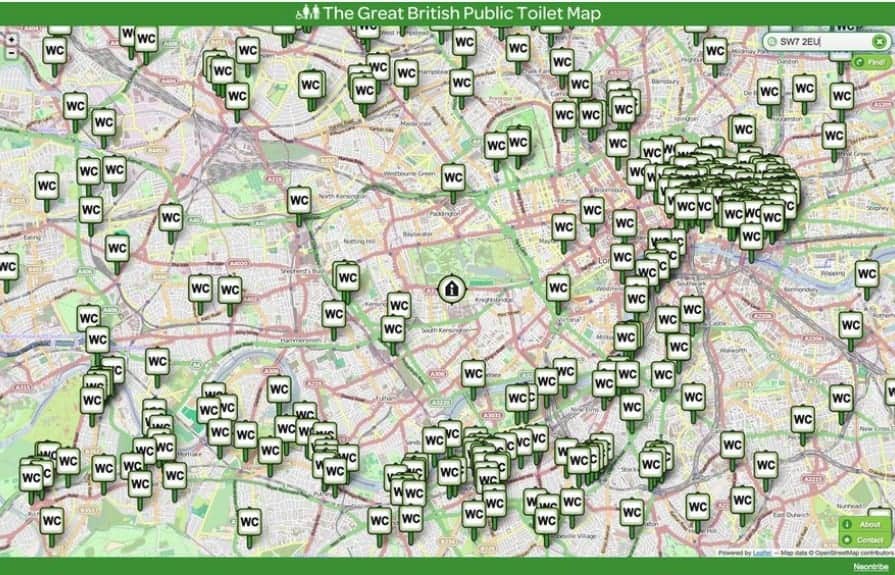
We spend rather a lot of time talking about toilets, adapted toilets, quasi khazis and other toilet related subjects on this website and it may seem like it’s a bit of an obsession but for less able people it’s a big deal. So it was good to discover the Great British Toilet Map at Breaking Through. The GBPTM uses open data provided by local councils to give information about public toilets in the UK. It currently displays more than 5,000 toilets and also includes data on privately provided toilets that the public may use, such as those in train stations. Importantly, it is possible to refine your search and set your preferences in order to find the nearest accessible toilet.
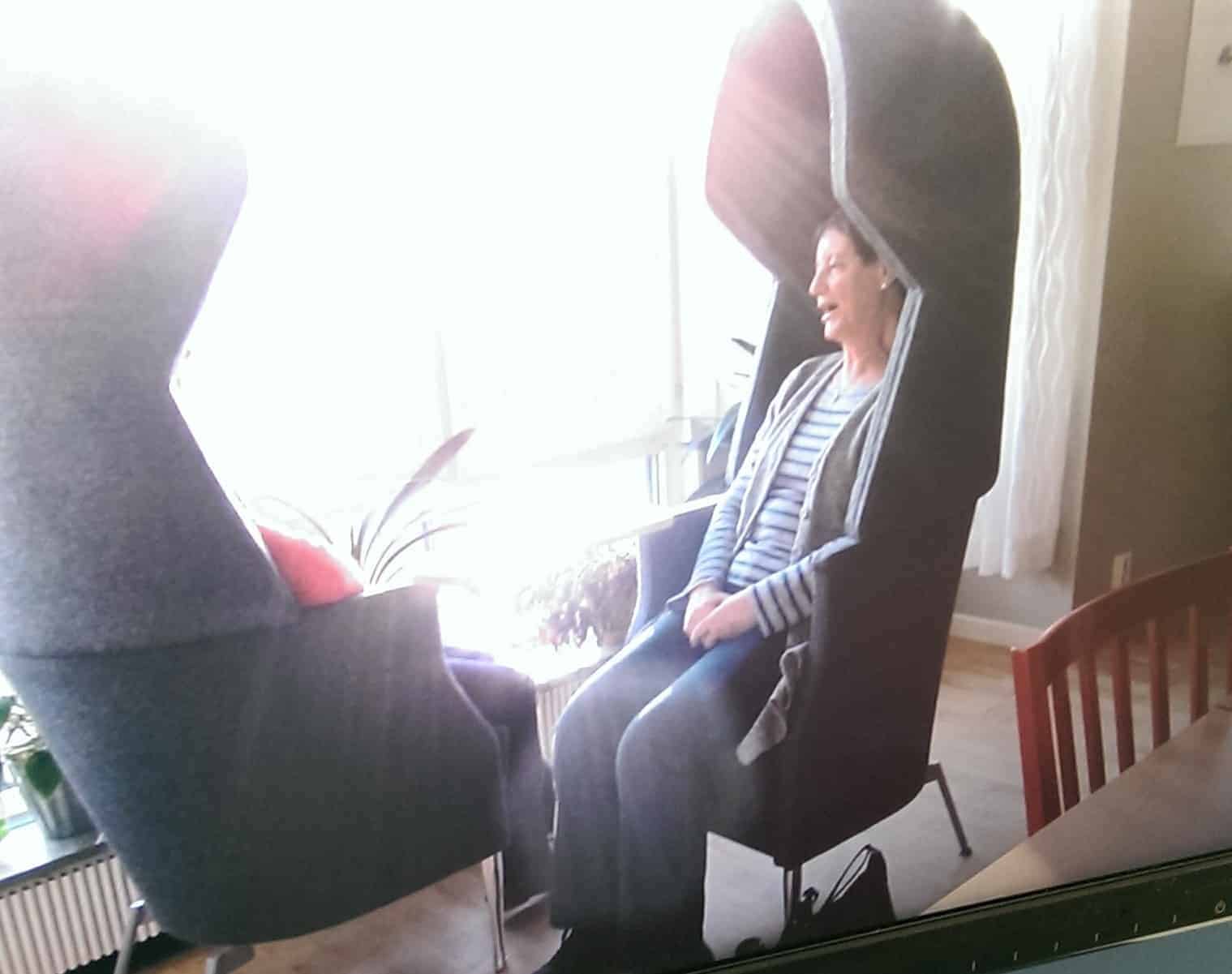
Finally, there was the Togetherness project, a exploration of new furniture concepts for the care market in Scandinavia. It highlighted the limitations of current care furniture and the opportunities for new designs which can improve people’s quality of life. They created four prototypes which were tested in Scandinavian care homes. The new designs were for an adjustable modular lounger chair, a tray table with a top that can charge tech devices, a dining chair that helps with sitting down and standing up and a conversation chair for people with hearing impairments. All are thoughtful ideas and all had an element of style to be appreciated too!
The Breaking Through exhibition put forward some bright and intriguing ideas for the future of inclusive design and the new age of disability. It was well put together, if a little low on detail, and an enjoyable exhibition. It’s also worth mentioning that the access at the Dyson Building was excellent and the reading materials were all at a sensible height for less able visitors. We await more progress for these designs and are anticipating great things from the Helen Hamlyn Centre!