
Fashion or function? Style or practicality?
When it comes to clothes, most less able people have, at some point, found that they’ve had to compromise one for the other in deciding what to wear. Far too often it’s fashion that takes the hit and because of physical limits and health complications, people find themselves sacrificing style for functionality. This should not be the case.
We’re now living in a time where people know about (if often ignore) the need for accessibility in building and architecture but somehow clothing remains frequently inaccessible. The ramps, lifts and streets that people move around on are generally (debatably?) quite good, but the clothes which they move about in remain a barrier. Even the few larger companies that design accessible clothing tend to target the elderly market and assume (rightly or wrongly) that fashion is of reduced importance to them. It’s a great shame and a situation which we don’t think should be the case. Nor, by the looks of it, do the people at the Open Style Lab, in Boston’s MIT university.
The Open Style Lab is an innovative program with the “aim to serve people with medical conditions that reduce their ability to independently dress themselves, or significantly limit the selection of clothing they can wear.” It brings together different disciplines from MIT and uses their varied skills to help solve the problems that less able people have with non-adapted clothing, in a fashionable way.
The program is a ten week, Saturday-only program at MIT set up by Grace Teo, a graduate student in the Health Sciences and Technology (HST) program at MIT’s Institute for Medical Engineering and Science (IMES), and co-chair Alice Tin. It teams up design, engineering and occupational therapy students to create clothing solutions for people with disabilities or their caretakers.
The course ran for the first time this summer and brought together students from the disparate worlds of fashion and engineering to pool their different skill-sets to design useful and stylish items for disabled clients. Teams of students were paired with expert mentors and less able clients who all worked together to create fashionable and practical solutions for the clients’ requirements, using a $500 budget.
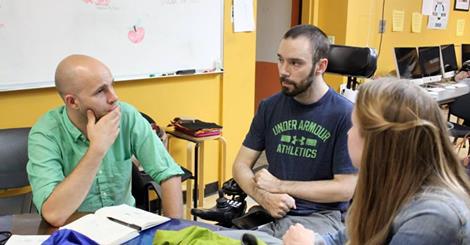
The clients had disabilities that include autism, amputation and paraplegia. After the ten week period they came away with some unique items of clothing, specifically created for their needs. The first couple of weeks were dedicated purely to observing and ascertaining the particular problems of the given client and working out in what ways their needs weren’t being addressed. Then the rest of the period was devoted to designing and testing solutions for those problems.
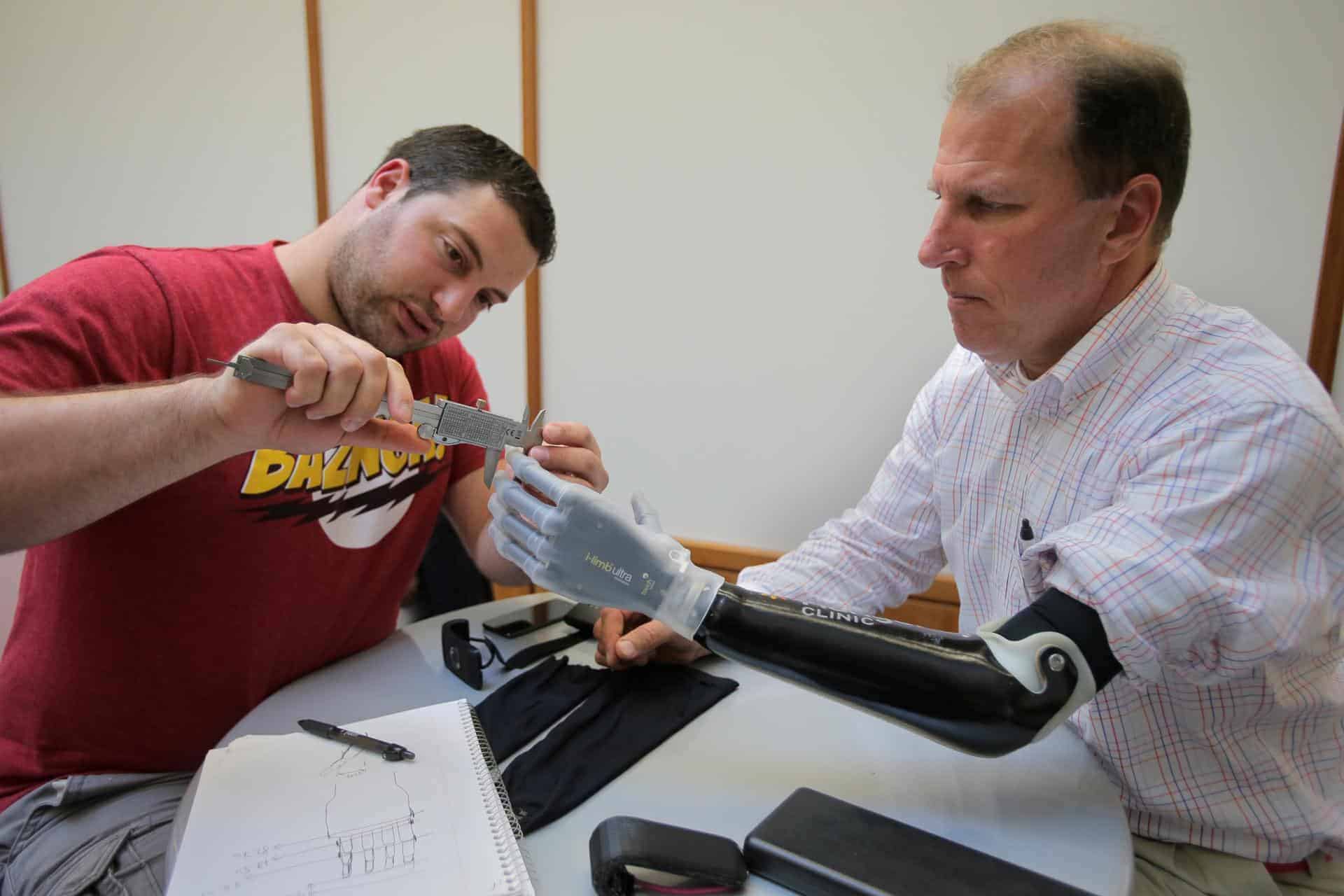
The designs they came up with ranged from simple little things like using magnetic buttons, to more complicated temperature regulating garb and subtly complex designs which allow people to slip clothing on and off quickly and easily. One client was Mike Benning, an arm amputee who uses a hi-tech state of the art prosthesis. He’d been finding that when he put on a coat, the sticky silicone of his new hand would get caught in the lining. The Open Style Lab’s solution was to use a 3-D printer to create a sheath for his hand that keeps the silicone away from the coat. Clearly this is don’t try it at home level engineering which now allows him enhanced flexibility in deciding what he wears.
Another client, a leg amputee, had found herself resorting to wearing shorts, even in the middle of winter, as they were easier to take on and off. This was not only uncomfortable but also unsuitable for more formal occasions where shorts would simply not do. One of the Open Style Lab solutions was to design her a fabric device which wraps around the leg and is attached with velcro. Another wackier idea was to develop trouser legs which could automatically roll up at the touch of a button. That may take a little longer than ten weeks to iron out the kinks but it shows the innovative work that the course encouraged.
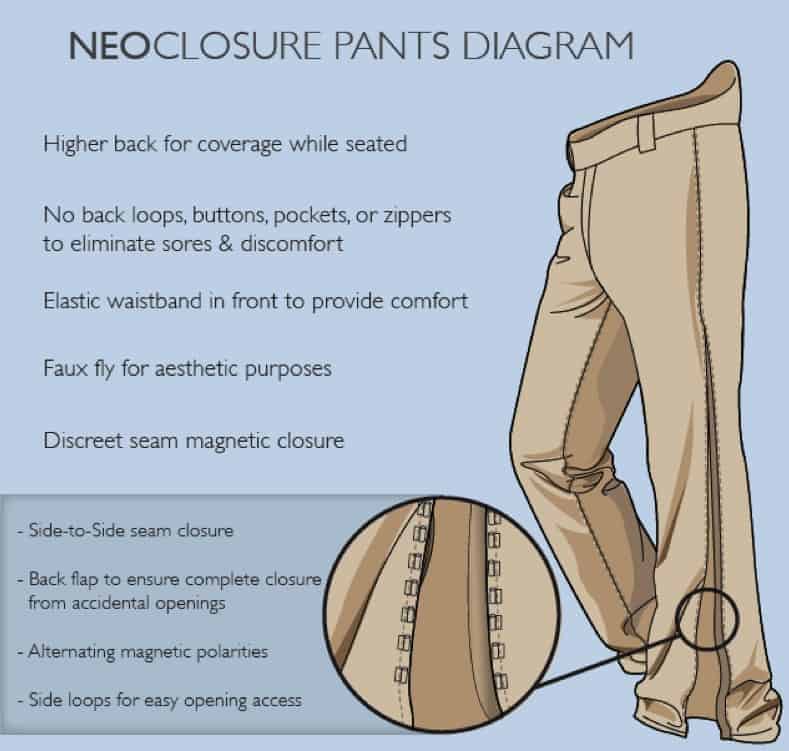
After ten weeks the clients came away with solutions for their problems, which is fantastic but ideally the course should be able to reach out to a wider base of less able people. In order to help more less able people remain fashion conscious the designs need to be produced on a larger scale. In an effort to make both the public and potential manufacturers aware of the Open Style Lab, the designs are now being displayed at the Boston Museum of Science with a view to being produced for other less able customers. Hopefully, next year the course will run again because anything that helps raise awareness of the possibility of making style more compatible with disability must be a good thing.
At BBS, our mantra is that style and disability need not be mutually exclusive, but we do realise that perhaps not everyone around us has cottoned on to this principle. We applaud the work of the Open Style Lab in sharing ways to help make the fashion vs. function compromise a thing of the past.
If you look through the Fashionably Disabled section of our website you’ll see many tips for remaining stylish.