
The biggest ever Winter Paralympic Games are now just hours away! It’s a shame that the games seem set to begin with the spectre of difficulty in Ukraine lurking in the background, but hopefully the Ukrainians will participate and the situation won’t impinge too much on what should be an exciting ten days of sport. One would like to think that the politics won’t affect the sport because there’s so much to be enjoyed.
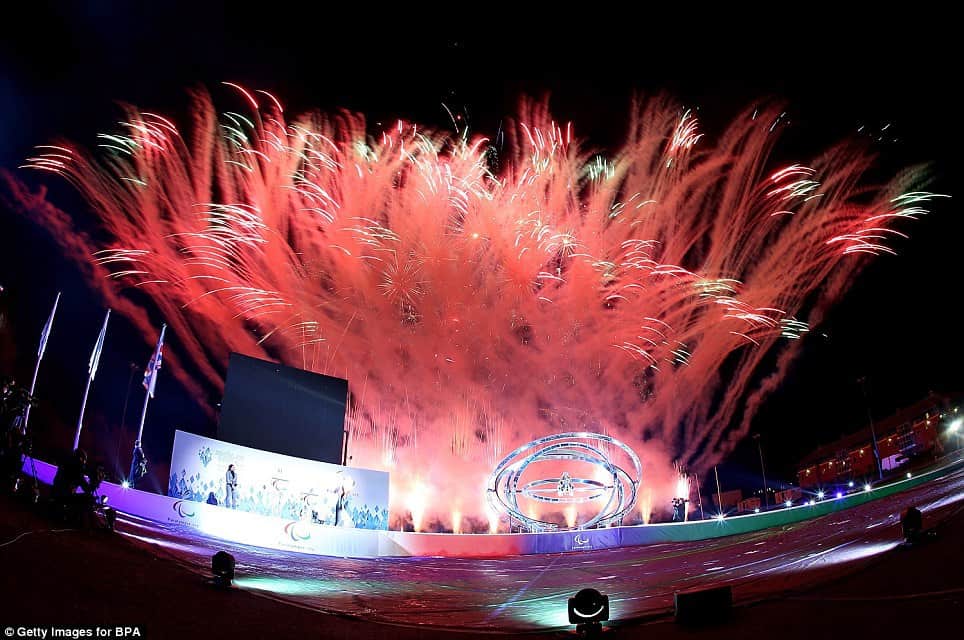
The Paralympics kick off this afternoon on Channel 4 with the Opening Ceremony. If it lives up to superb display of the torch ceremony at Stoke Mandeville earlier in the week it’s bound to be nothing short of spectacular. The build up begins at 3.30 with the actual ceremony getting under way at fourteen past four in the afternoon (20:14 Sochi time). It should be dazzling and there’s a good chance the Paralympic opening could (literally) outshine the Olympics display by getting the logo to light up completely!
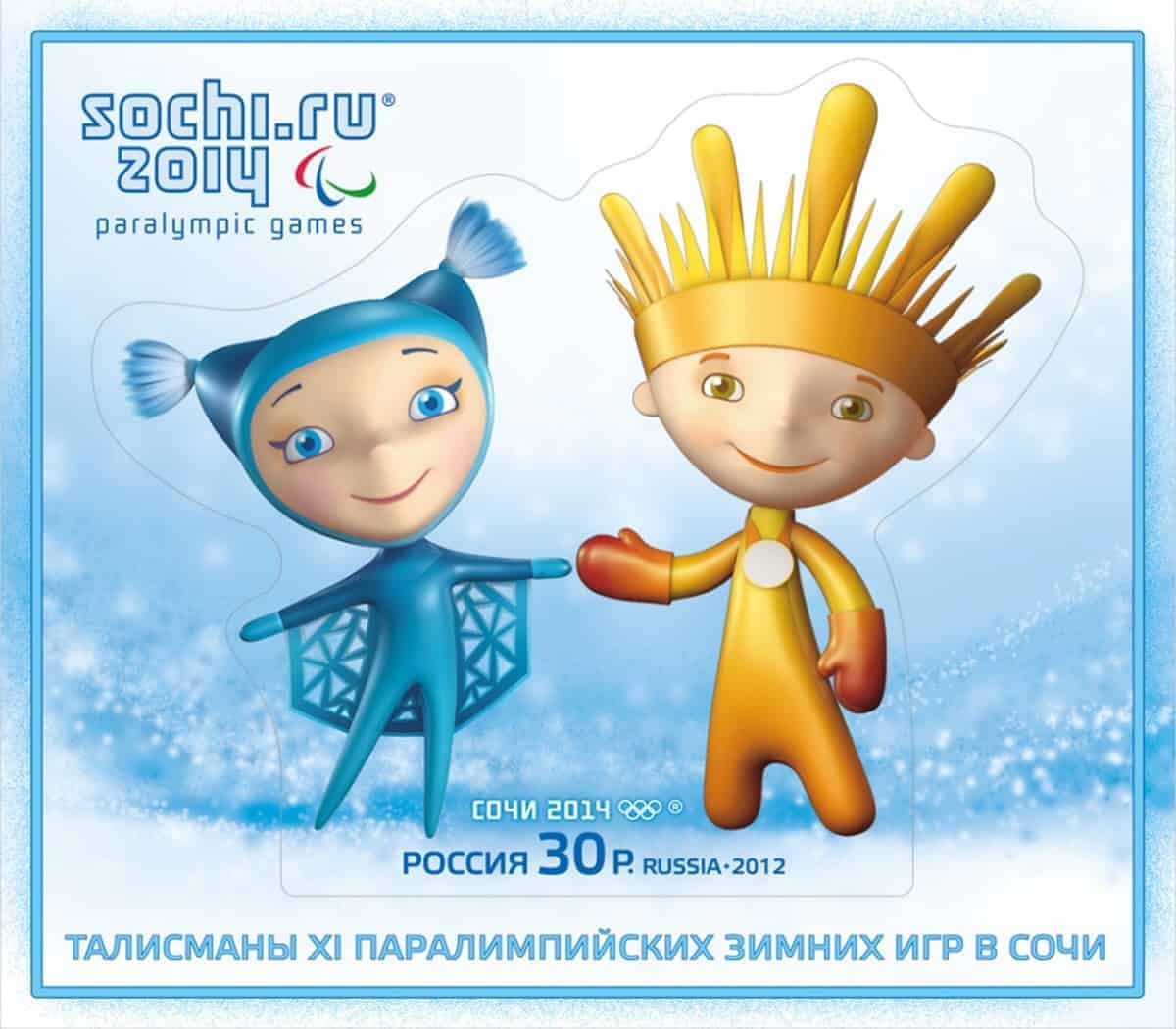
The unveiling of the mascots for the games is always a big deal for some reason and Sochi have created the almost too cute Ray of Light and Snowflake. As ever, they have been given a back-story (because it wouldn’t make sense for these cartoons to just spring out of nowhere would it?): The Fire Boy comes from a planet where it’s always hot, while the Snow girl came to earth on an icycomet. She looks like a snowflake, while he has hair that looks like fire. Maybe this combo helped to inspire Channel 4’s daring S**t hot in Sochi adverts?
The Sochi Games are set to be the biggest Winter Paralympics ever, featuring 575 competitors, from 45 different countries, competing in 72 medal events across five different sports. Great Britain has taken a fairly modestly sized team of 15 athletes – 10 skiers and the wheelchair curling team. Russia – who last time they hosted an Olympics, in 1980, shockingly claimed that they didn’t have any disabled people – have 69 athletes competing (second most behind the USA).
As we mentioned, there are five Winter Paralympic sports, with various different categories of competition within each. Let’s take a look at the sports on offer:
Alpine Skiing – 32 Medal Events
It’s all about downhill speed in the various Alpine Skiing events. There are five disciplines – downhill, super-G, giant slalom, slalom and super combined and three categories of racer – visually impaired, standing and sitting.
Skiers with upper body impairments use standard skis whereas those with lower limb amputations can use one or two skis and a stabiliser that rests on the snow aiding balance. Sitting skiers use a specially adapted mono ski. Most interestingly, visually impaired competitors use a guide who goes ahead of them and relays instructions on the course via a headset.
Skier Millie Knight, GB’s youngest ever Winter Paralympian at age 15, will be our flag bearer at the opening ceremony. To find out more about disabled skiing take a look at our blog on it.

Cross Country Skiing – 20 Medal Events
It’s a test of stamina as competitors race, as individuals or in teams, over a course ranging in distance from 1km to 20km. There are classes for standing, sitting and visually impaired skiers (see above), and races in either the classical (parallel) or free (skating-style) technique.
Visually impaired skiers compete with a guide, while athletes with a physical disability compete using either a sit-ski or standing using one or two skis and/or poles. Russia’s nordic skiers are favourites and likely to be challenged by… the Ukrainians (possibly competing under the IPC Flag).

Biathlon – 18 Medal Events
Described by Channel 4 as “cross-country skiing with guns”, Biathlon events are contested over a course divided into three stages in between which competitors use a rifle to hit targets from a distance of 10m. It’s all about trying to control your heart rate after skiing round the course, since missed targets mean time penalties and can be pivotal in deciding who wins.
The women’s races in Sochi are over distances of 6, 10 and 12.5km while the men race over 7.5, 12.5 and 15km. Russia won an astonishing 16 of the medals at Vancouver so they’re obviously very strong favourites in this competition.

Wheelchair Curling – 1 Medal Event
The population seemed to be entranced by Curling during the Sochi Olympics and we’d not be surprised to see a similar cult following grow for Wheelchair Curling too. It’s essentially the same game: two teams slide stones across the ice aiming to get closest to the centre of the target. The main difference is simply that Wheelchair Curling doesn’t have any sweeping and players can use an extender cue to slide their stones.
The teams are mixed, so there is only one gold medal available. In 2006, at Turin, Team GB won the silver medal, although they didn’t win anything in 2010. Let’s hope they can still be in the competition at the end of next week and in with a shot of winning some bling!

Sledge Hockey – 1 Medal Event
If you’ve enjoyed watching Wheelchair Rugby (aka murderball) in the past, then this might be the sport for you at Sochi. It’s fast, skillful and often quite aggressive, making it one of the best spectator sports at the games.
It’s very similar to Ice Hockey, except that players sit on specially designed sledges, using two hockey sticks to propel them around the ice and control the puck. Like in Wheelchair Curling, there is just one gold medal, with mixed teams. The favourites are, Ice Hockey superpowers, Canada and the USA.
Last year Matt Coleman, one of the GB Sledge Hockey players, wrote an excellent guest blog on the sport for us. Sadly, the GB team didn’t manage to qualify as one of the eight teams at Sochi but it’s an entertaining read and hopefully they’ll come back stronger in 2018.

Channel 4 will broadcast 150 hours worth of Sochi ’14 -that’s 50 hours on Channel 4 and More 4 as well as another 100 hours of live streaming. Again the channel demonstrates a real passion for disabled sports with much of the team from London 2012 returning. The one major exception is “everybody’s-favourite-woman-in-the-world-2012”, Clare Balding, who has been sent to Crufts! Anyway it should be brill, fun and informative if the Channel 4 Paralympics page is anything to go by.
That should be the basic knowledge needed for your ten days of isolation in front of the TV. If you want to learn more in depth information on Sochi, take a look at Channel 4 or the Paralympics websites.
We’re off to our sofas to watch the opening ceremony. Let’s hope for another inspirational games at Sochi!