
Creating stylish assistive products and mobility aids is great, but something that may well be even better is the idea of inclusive design – designs that are made for everyday use by everyone, regardless of mobility or ability. Inclusive design is a purer way of encapsulating the ethos of freedom shared and although mobility products are obviously essential, inclusive design is a bigger thing which can filter through into all sorts of products. Think of contemporary designs that make life easier, like lever taps, click and slide cupboards or pull out dishwashers – these aren’t designed for less able users but to be easy for anyone to use.
The British Standards Institute (2005) defines inclusive design as “The design of mainstream products and/or services that are accessible to, and usable by, as many people as reasonably possible … without the need for special adaptation or specialised design.” When embraced, inclusive design can work throughout all types of different design to make attractive and accessible design for everybody.
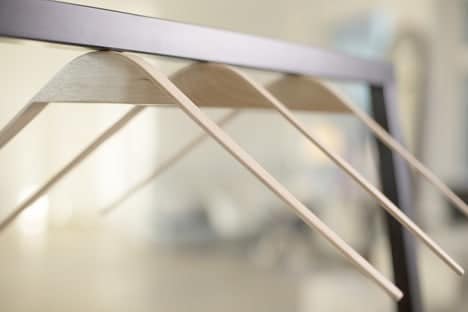
These Cliq hangers look like a good example of inclusive design. They’re modelled on classic clothes hangers, except that instead of hooks they have powerful magnets to attach to the rail. This means that they’re less fiddly to get on and off the rail: to hang them up, simply touch the hanger onto the rail and to take them off, just yank them down. They’re a cool, streamlined twist on a way to store clothes.
They work well, with potential problems clearly worked out. The magnetic attachment is no flimsy thing and things won’t fall off the rail all the time as the hangers are able to hold up to 2 kilograms worth of clothing at one time. And if you’re thinking “but hang on, won’t the hangers get stuck to one another?”, think again. In fact, an extra little benefit of magnetic hangers is that the magnets are set up so that hangers naturally repel one another, creating a space between them and making them easier to access.
They look like a modern and stylish way to store your things. They’re available to buy online from May 2014 onwards with shipping costs varying based on where you live.
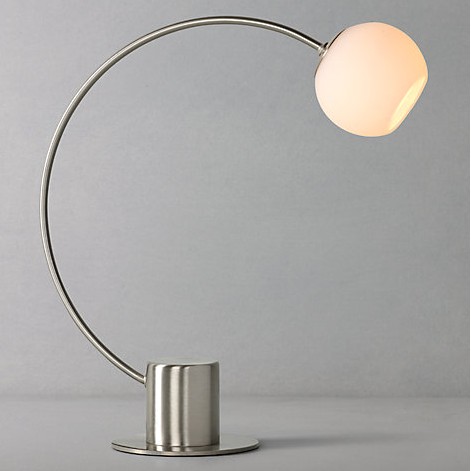
Just like Cliq hangers, touch lamps look sleek and are easy to use. Instead of having to reach for and operate a button or switch, you just have to lightly touch the base to turn them on and off. They’re easier to use for people with limited dexterity but they haven’t been designed specifically for that purpose. Touch lamps are especially handy when the lights are off or when you compare them to some of those lamps with buttons right by the light bulb, meaning you have to grope around or stare into the shining light to find the switch. There’s also the added benefit that many operate with adjustable lighting levels all controlled by tapping the base.
This is the Helium Touch Lamp, available at John Lewis for £35, but touch lamps are widely available and can be found at most home and furniture shops.
Joseph Joseph are masters of inclusive design. We’ve featured some of their products before because they were both funky and functional for everyone. A couple of stand outs in their new collection are their Scoop Colander and Prep&Serve bowl.
The Scoop Colander is brilliant because it allows you to drain your food using only one hand. Instead of having to lift a heavy saucepan of boiling water and then pour it all out into a colander, you can simply scoop out the food from the saucepan. It’s much easier and safer to use than regular colanders are. The Scoop Colander costs £8 for a small sized scoop and £9.50 for a large and they can equally be used as serving utensils too.

Joseph Joseph’s Prep&Serve multi-function is a three in one – preparation, draining and serving bowl – work of near genius. With an inbuilt colander surface at the top edge of one end and a handle sculpted into the bowl at the other end, you can tip the bowl to drain out any excess fluids. Again, this means that you don’t have to transfer the contents into another colander, making life less of a hassle and also saving on washing up (which is always a good thing!) It’s awesome and only costs £12. Both of these designs are fantastically stylish and are definitely inclusive. You just wonder what they’ll mean for Joesph Joesph’s range of colanders!
Inclusive design is an excellent premise where accessibility isn’t just something tacked onto designs for products or services at the last minute but is considered throughout the process. We all want to live in a world where we can all have equal access to style and these products really show the value of inclusive design. They don’t just cater to less able people but nor do they exclude anyone – perfect examples of how to show that style and disability need not be mutually exclusive.