
If you’re someone who doesn’t go to the cinema too much but, after yesterday’s nominations, are looking for a nice cinema to watch an Oscar contender in, then we’d strongly advise going to an independent cinema. Don’t fall into the trap of going to your nearest chain – if you don’t go to the cinema often you might never want to go again after that. Independent cinemas provide a much more enjoyable movie going experience than any multiplex chain cinema can offer.
With the best will in the world, multiplexes are a little bit horrible. This coming from people who go to them all the time, they just are. You feel a little bit like you’re part of the money making machine, only there to eat ridiculously priced popcorn and watch the latest superhero movie. There’s not necessarily anything wrong with that but multiplexes lack a bit of character and charm, plus you often find that your fellow audience members spend parts of the film talking or even using their mobile phone. Not that that can’t happen at an independent cinema – it’s just less likely. If you’re going for a special trip to see one of the films of the year you may like to make the most of it and head for an indie treat.

What’s more, as well as supporting your local independent cinema and probably enjoying a more stylish trip to the movies, going to a smaller cinema might actually be easier in terms of accessibility. Strange as it seems, a 2011 report by Trailblazers found that smaller, independent cinemas tend to do more to improve disabled access than the bigger chains who should have more money to make the necessary changes. Perhaps, as well as purely wanting to be more inclusive, they’ve realised that improving access is the way to tap into the less able market – a market which makes up 12% of all moviegoers.
Whether it’s altruism or business sense, independent cinemas deserve to be rewarded for their efforts. We’ve put together a guide to some of the best in the country:
The Everyman Cinemas are what you may call ‘super indies’ because although they’re not linked to one of the major chains, they have different venues around the country. The different locations have differing levels of access (Their Screen on the Green in Islington for example is not accessible at all, according to their box office, there are 2 steps up and no wheelchair spaces). The one we like is in Maida Vale (see previous review). It’s stylish and very much part of the current trend of cinemas with sofas, wine and pizzas on offer.
There’s a modern lift to the first floor, where one of the screens is and a ‘stairlift’ to their other screen. In the cinema you can transfer to the sofas or sit on the end in the aisle – not a problem as there was plenty of room. Their disabled toilet is perfect too. The other Everyman Cinemas have different standards of disabled access but are worth looking into as they’re very on trend.

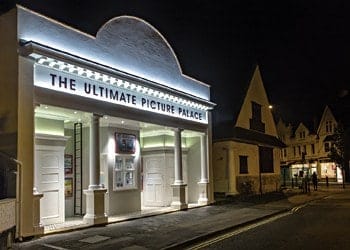
The Ultimate Picture Palace in Oxford is a tiny but charming one screen cinema with a single 116 seater art-deco auditorium. They pick only the best films and take out the endless stream of adverts that you get at most cinemas, leaving only a couple of trailers before the film begins. There’s also a little bar at the back of the room that opens thirty minutes before the film begins and closes just before the lights go out.
As well as new(ish) releases – most films come to the UPP about a month after their general release – they put on classic movie seasons such as their current bill of ‘Dramatic Duos’, featuring the likes of Top Hat, Manhattan and Casablanca. On Tuesdays there is an early evening subtitled screening of the week’s main feature.
The access to the main entrance of the cinema and ticket office is level, as is the entrance to the screen and bar. The toilets are below the screen down a few steps and are not adapted for disabled users. However, they have an arrangement in place for customers to use the facilities of their neighbours. It’s not really a good look to have to leave the building and go somewhere else in the middle of a movie but this is a quirky little cinema with lots of character.
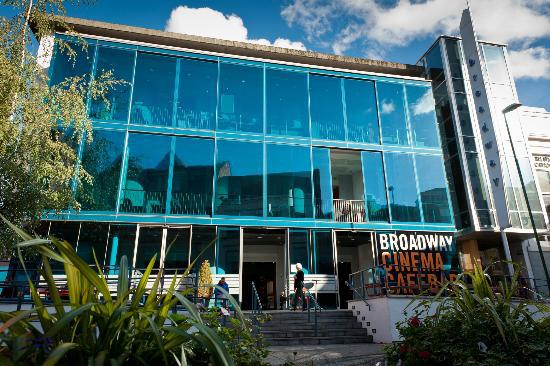
The Broadway cinema in Nottingham has recently been named the “smartest cinema in the world”. We’re not exactly sure what the criteria for that are but it means that The Broadway joins the ranks of some of the most celebrated cinemas on the planet. Unlike many classic small cinemas it’s in a contemporary, modern building. It’s got two new cinema screens, a new bar and a glazed facade that displays commissioned work by digital artists. It’s got a cool bar serving “Broadway Bites” and, as with most or all of these indies, you can take your drink into the auditorium too.
The building and screens are fully accessible to people using wheelchairs. If you need extra help getting comfy, back supports and seat wedges are available from the box office. An infrared hearing system is fitted in each auditorium, Screen 2 and the box office also have induction loops, which can be used with your hearing aid on the ‘T’ setting. Guide dogs are also welcome.
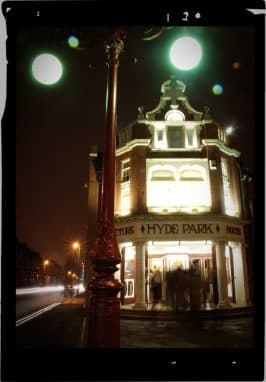
Hyde Park Picture House is, despite its name, not part of the Picturehouse chain (see below) but just an old school independent cinema. Built in 1914, way before the first Oscars were handed out, this arthouse cinema has been going strong for a hundred years – quite remarkable when you consider that it has had to face down the rise of television, VHS, DVD and the internet! The Hyde Park still boasts many original features including gas lighting and a decorated Edwardian balcony. Both the cinema and the ornate gas lantern outside are grade II listed.
Level access is available to the stalls via the Brudenell Road fire exit. There are four wheelchair spaces in the auditorium. Unfortunately, their toilets are not accessible via wheelchair.
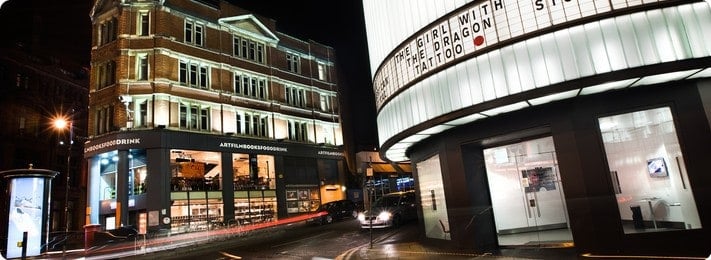
The Cornerhouse is one of Manchester’s cultural centres, with patrons including Danny Boyle, Damien Hirst and Helen Mirren. Based in a former furniture shop the building has three cinema screens, three art galleries and a bar in which to dissect what you’ve seen afterwards – it must have been a massive shop. As well as showing new and classic arty movies The Cornerhouse hosts talks and courses on film.
The Cornerhouse is based in two buildings – the main building and the Cinema 1 building – both of which are accessible. The bars, galleries and Cinema 1 are all accessible either by lift or by virtue of being on the ground floor. There are steps to get to Cinema 2 with a wheelchair lift available to get up and down them. There are also steps to Cinema 3, but it is also accessible via a ramp. Accessible toilets are on the ground floor in both buildings. They provide a good programme of services for hearing and visually impaired people too.
Newcastle’s Tyneside Cinema has three screens plus special events, live music, quizzes and even knitting clubs. They bring a blend of old and new with the main screen, “the Classic”, still designed around its original 1930s newsreel screen and magnificent art deco auditorium. By contrast, the other screens, The Electra and The Roxy, have far a far more contemporary feel to them with bright seating and modern murals. The complex had a £7m revamp in 2006, but the 1930s tea room remains intact.
After the redevelopment The Tyneside is now more accessible than ever, with lifts to all floors, accessible toilets on floors 1, 2 and 3 and power assisted doors. Each screen has a small number of seats designated for wheelchair users. The Classic has 2 spaces allocated via removable seating in the circle (available at the price of standard ticket) The Roxy has 2 spaces allocated via removable seating and The Electra, 4 spaces allocated. There is more information on their website and they even have a email dedicated entirely to answering further questions relating to access (access@tynesidecinema.co.uk).
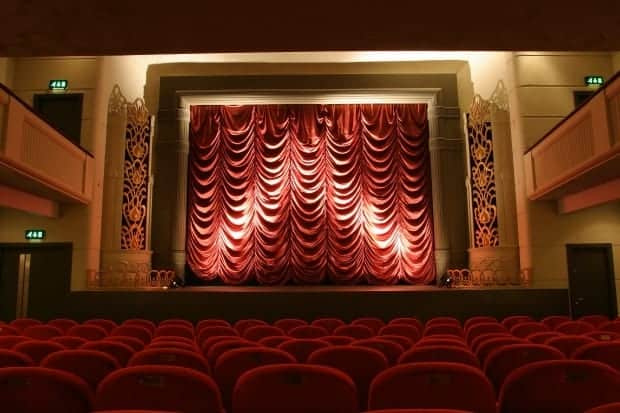
Watershed, down by the harbour in Bristol, is another example of an independent cinema within a more general ‘cultural hub’ spanning across various artforms. We’re most interested in the three cinemas and the large cafe/bar. They show a diverse and wide ranging programme of films in their comfortable screening rooms. On top of that, Watershed is in a good location for eating out afterwards.
Watershed’s website describes the venue as a “fully accessible building adapted to make your visit as easy as possible”. The cinema screens are all on the first floor but there is a lift to get there and step free access from there on. There’s an adapted toilet on that level, induction loops in all screens and guide dogs are welcome. Disabled seating is limited so, as ever, you need to book ahead.
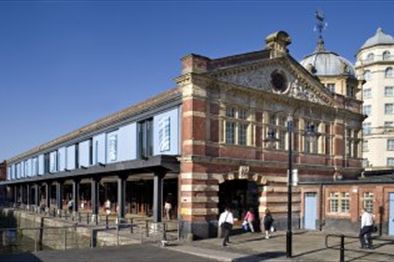
The Phoenix in East Finchley is one of the country’s most well known independent cinemas and has been championed by the likes of Ken Loach and Mark Kermode. It’s one of the oldest cinemas in England having first opened over a hundred years ago. It’s a classic cinema with only one beautiful, old fashioned auditorium.
There is full access for wheelchair users with an external ramp, lift, disabled toilet and low counters. There are four dedicated spaces in the auditorium.
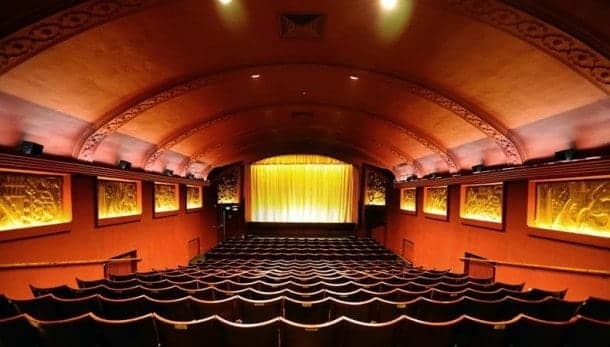
Picturehouse and Curzon cinemas are both minor chains or ‘collections of independent cinemas’ (the former now owned by Cineworld) which focus on giving a more enjoyable experience than at the average multiplex. They have nice snacks and drinks available at the bar and then smaller and more comfortable screening rooms. If nowhere on our list has been local to you it’s worth checking one of their websites out (most Curzons are in London).