
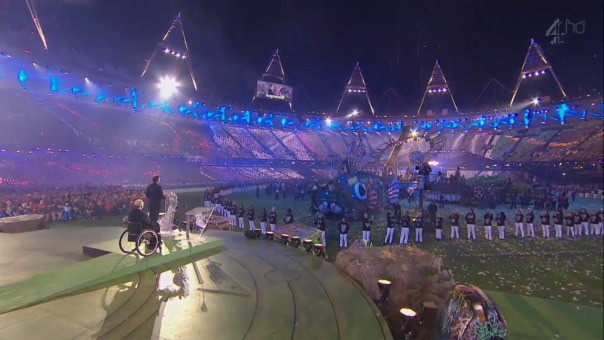
The London 2012 Paralympic Games kicked off exactly one year ago today. We were treated to twelve days of unparalleled Paralympic sport as 4,237 athletes from 164 countries competed for 503 medals, with 251 world records being broken in the process. 2.7 million spectators turned up to watch in person with another 39 million watching on TV at home as the whole nation went wild for disabled sport.
In his final remarks of the Paralympic closing ceremony Seb Coe echoed what was the consensus opinion when he stated that: “In this country we will never think of sport the same way and we will never think of disability the same way… the Paralympians have lifted the cloud of limitation”.
One long year later, how accurate does that comment seem?
As Coe alluded to, there are two key issues to Paralympic legacy – sport and society. In order to judge the legacy we need to ask if there are more disabled people participating in sport and if the perception of disability within the public has changed in a positive way.
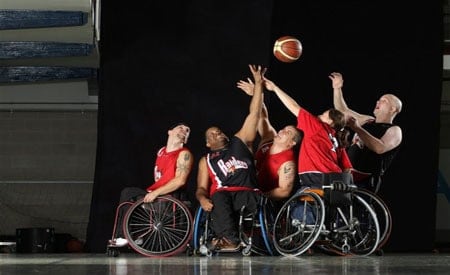
Starting with sport, the good news is there are more disabled people taking part in sport. The Parasport website, where people can find disability sports clubs, has had 800 more clubs registered since the Paralympics, and an increase in traffic of 300%. There’s been a 25% increase in people playing Wheelchair Basketball and Louise Sugden, who played for the GB team in London, is cautiously optimistic, telling us that “there is still a long way to go but with events happening to raise the profile of disability sport all the time, it feels like there has been some progress.”
Paralympic archer, Leigh Walmsley, also had a positive view on this front. “Several of my disabled friends have become involved in sport since the Paralympics,” she said, “which is fantastic. Long may it continue.”
However, only months after the games, the news came that participation had not been progressing as hoped in the wake of London 2012. A survey by the Sport and Recreation Alliance reported that 96 per cent of UK Gyms had experienced no increase in disabled membership since the Games. On top of that, only 18% of disabled adults undertook physical activity for more than 30 minutes a week, compared with 38% of non-disabled adults (although you might add that the able bodied stat is hardly brilliant either).
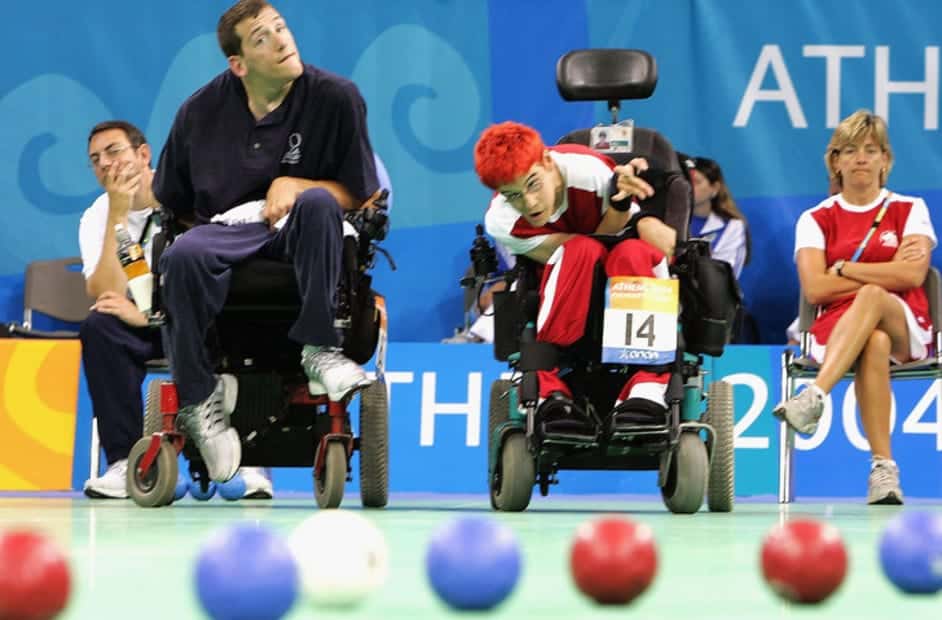
David Smith, who won Boccia bronze and silver for Britain is somebody who can understand these statistics from his own point of view. “Sadly for me Boccia has been left behind a little since London,” he told us, “interest has cooled and its business as usual which is sad.”
So maybe the take up for sports hasn’t been universally successfully but it’s hard to disagree that there has been a change in how people outside of disabled sports have reacted post-Games. “I feel that the sport [now] has respect for being elite and not just disabled people ‘having a go’.”Sudgen says.
There has been an increase in people seeing disabled athletes as sports stars and role models in their own right, with more than 80% of people polled after London 2012 agreeing that disabled athletes are as talented as their able bodied counterparts. This has led to a public desire to see more disabled sport, backed up by increased coverage of disabled sports on television such as the IPC World Championships in Athletics from Lyon and Swimming from Montreal last month.
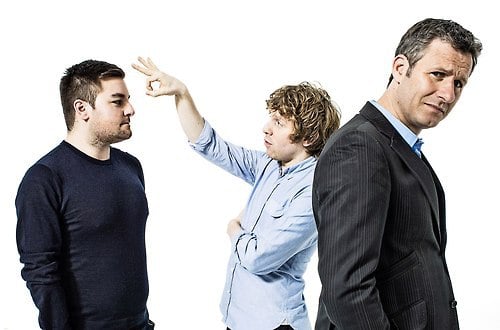
Covering both sport and TV, The Last Leg has provided an interesting insight into how the change of perception from the Paralympic experience can osmose into society in general. Having been a major part of Channel 4’s coverage during the Games, the programme has since returned to screens twice without the same focus on sport. This suggested a commitment from Channel 4 to disabled programming but also a strong desire amongst the British public to see it. Let’s be honest, no TV programme was ever commissioned on purely altruistic grounds. That the public wanted to see it again could indicate to some extent the way that the Paralympics had helped change attitudes towards disability in society.
The shift in perception of the less able was immediately noticeable. In the Games’ aftermath, a BBC survey revealed that 79% of people felt that the Paralympics improved their perception of people with disabilities in general (although it should be noted that only 65% of less able people polled agreed with this view). David Cameron seemed to capture the public spirit when he movingly told the Conservative conference that “When I used to push my son Ivan around in his wheelchair, I always thought that some people saw the wheelchair, not the boy. ‘I think today more people would see the boy and not the wheelchair – and that’s because of what happened here this summer.”
The Paralympians that we spoke to all broadly agreed with this image of a post-London 2012 Britian. Swimmer, Susie Rodgers, who won three bronze medals last summer, told us that “personally I feel the Games raised acceptance levels.” Smith was in agreement saying that “I think there is genuine understanding now. Or at least a lot less of the misconceptions which used to follow us everywhere we went. I think people have learnt to accept people as they are and not to judge before having an informed sense of that person.”
However, there is a growing sense that, although disabled athletes are now perceived differently, other less able people have not felt the same positive transformation since the games. “In my experience, the public perception of disabled people since the Paralympics is a two-edged sword.” Leigh Walmsley says, “while many Paralympians have been given new and greater opportunities, disabled people in general are still being treated the same as ever, and in some cases, worse.“
“I have heard far too many stories from my disabled friends about being spit on and harassed when they’ve been in public going about their own business. So while the perception of disabled sport has improved, there is still a lot of work to do about the public perception of disability in general.”
This argument is backed up by statistics. A survey by Scope, of 1,014 disabled adults, found that 81% said they had experienced no improvement in the attitudes shown towards them, while more than one in five of these said behaviour towards them had deteriorated since the Games. A rise in disability hate crime has also been recorded in 2012 and some of the stories Scope found are truly shocking.
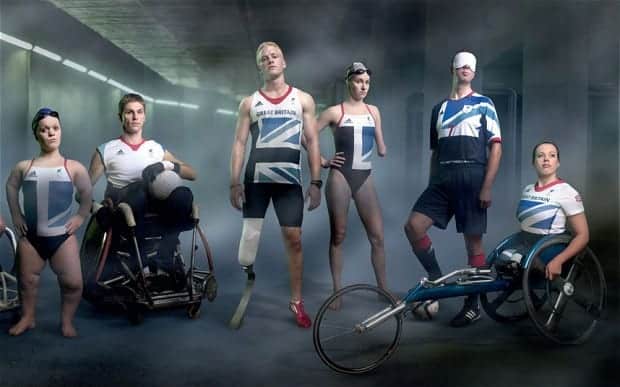
A growing rhetoric from some quarters, of scroungers and skivers, which accompanied cuts of around £28.3bn to the benefit system has probably played a role in this. Many disabled people who are out of work through no fault of their own and even people paying taxes are being victimised as welfare scroungers. That 73% of disabled people have experienced the assumption that they don’t work is seriously damaging to the idea of the Paralympic Legacy. It seems that, troublingly, it has taken just one for year vast sections of society appear to have turned on the less able.
The Paralympic Legacy, such as it is, seems to have created an accidental disconnect between how people think about disabled athletes and how they think about disability in general. In a sense, the mismatch in this perception of disabled athletes as superhumans and then the rest of the disabled population as ‘scroungers’, may even have exacerbated problems.
These numbers don’t lie but fortunately there are some more positive figures around the corner in the shape of the next generation. If London 2012’s legacy is judged based on its pledge to inspire a generation then it seems to be working pretty well. A survey last month for the BBC programme Newsround said that 70% of children asked said the Paralympics had changed their attitudes towards disabled people. On top of that, a majority of the eight- to 12-year-olds asked found the Paralympics more inspiring than the Olympics. Tim Hollingsworth, chief executive of the British Paralympic Association, speaks a lot about the generational effect of the Games and of how he feels this is where the real legacy of London 2012 will lie.
No one wants to hear that things will be better in another generation and there is no reason that we, as a society should have to wait. The problem of the Paralympic legacy so far is its ability to translate throughout the rest of British society. On that front, the jury is out for now. But there does seem to be light at the end of the tunnel and the most recent evidence does suggest that London 2012 may have managed to inspire a generation.