
A brilliant promoter of modern and stylish design, the Coventry University Health Design & Technology Institute (HDTI) helps the helpers by assisting people who are aiming to create assistive products. The HDTI provides design, prototyping and user-centred product evaluation services to entrepreneurial individuals and companies developing new technologies designed to assist less physically able bodied people. The aim of the institute is to support the development of new and innovative community healthcare products, focusing on the ageing population and people with disabilities and chronic health conditions and promoting quality design in assistive living.

Located in the Coventry University Technology Park, HDTI houses design studios, workshop and test areas where clients, researchers and healthcare professionals can explore and evaluate new ideas. They do research into the changing needs of an ageing population and the requirements for assistive living, which helps to inform both within and outside of the institute when it comes to designing new products. They also support local SMEs in bringing their product ideas to life. Using their in-house design team, design studio equipped with industry-leading hardware and software and fully equipped workshop they’ve created some really interesting and attractive new concepts and products for the less able future. Let’s take a look at some of their work:
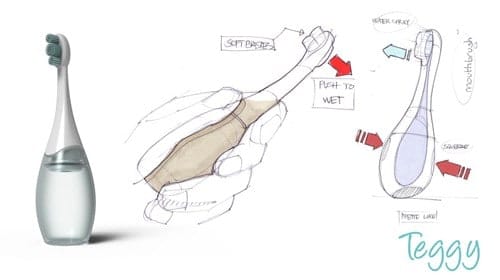
The award winning Teggy mouth brush was developed by HDTI for nursing staff at University Hospital, Coventry, to make brushing patients’ teeth easier. It includes a water reservoir in its base that, when squeezed, sends a mist of water into the patient’s mouth via small holes in the brush head. Teggy also features a flexible angled neck and a hygienic cover to protect the head and is now undergoing further development to bring it to market.
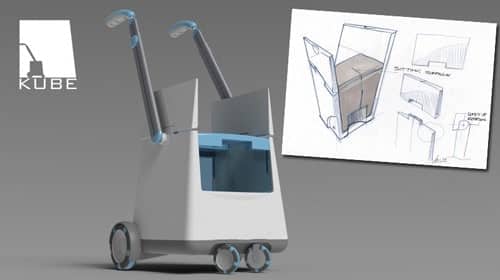
KUBE is essentially a new take on a rollator, created as a solution for users to easily transport goods with the added benefit of a perch seat. It’s primarily aimed at shoppers with reduced mobility to provide support and stability. HDTI explored the idea with extensive sketch concepts before developing the design in 3D CAD (SolidWorks) and creating photo-real design visualisations (PhotoView), but have not yet taken it further; onto the market or into a prototype stage.
A collaboration between HDTI and Abianco came up with this self-articulating shock absorbent crutch ferrule. The ferrule greatly reduces the pressure and strain caused by the crutch hitting the ground and means that users are less likely to end up back at the doctors with shoulder trouble. They also designed a soft gel walking stick handle for people living with conditions such as arthritis and Multiple Sclerosis (not pictured).

This Assistive Watering Aid looks like a simple but clever design to make it easier for people to drink from a water bottle with increased control. It stands out as looking sleek and intelligently packaged while having a strong practical use once you take it off the shelf.

We applaud the efforts of the HDTI who are kindred spirits in wanting to make the world a more accessible place through attractive assistive design. As much as we’re against ostracising less able people, now we know that the HDTI is there, we may suggest literally sending people on a brief trip to Coventry!
If you have an idea for an assistive product and are part of a small or medium sized company operating in the community healthcare sector in the West Midlands region, it may well be worth visiting the HDTI Website. Qualifying companies are automatically eligible for five days of consultancy support, completely free of charge, which can be used to provide product design and/or usability testing.
Hello,
I’m in the process of working on an invention for propelling a regular manual wheelchair.
What would be the way to get in touch with someone who can evaluate and critique the devices I have come up with?
Thanks
Dimitre
We have a review panel of wheelchair users if you would like to get feedback