
With the Oscar nominations taking place today we thought it would be a good time to look into how easy it is to access the UK box office’s finest films. As many as 12% of cinema goers are disabled and cinemas are a more positive collection of venues, in terms of accessibility, than many others. However, there are still some problems: a lack of choice of good seating positions, limited screenings and even stories of people being told to move seats because they’re a ‘fire hazard’.
These days most cinemas are fairly accessible, some more than others. But the bigger problem is that less able viewers still have to compromise a lot. For instance, many cinemas only have some accessible screens, meaning that the choice of what film you go see is greatly reduced. Booking tickets in itself is a challenge too – Odeon seem to be the only chain with an easy to book, online process, whereas others require making a premium rate phone call to book. Then, once you get in, wherever you go, the seats are often in bad positions – at the front, the back or in the aisle. A particularly common issue is having to sit at the front, where you have to crane your neck to see and feel as though you’re obscuring the view of the people behind you.
Some chains have been more proactive than others but it’s still something of a postcode lottery to determine whether your local cinema will be accessible. Somewhat surprisingly, smaller cinemas tend to work harder than chains in this area. Picturehouse Cinemas have probably done more than most to improve access in their cinemas, but they do tend to be in more impractical buildings in the first place in comparison to big multiplex cinemas like Vue, Cineworld and Odeon which tend to be in shopping centres or on the outskirts of town. Below is a chart of access in cinemas from a couple of years ago.

But it’s not all bad and the cinema industry has clearly been working to help get less able people into cinemas. One example of this work is the Cinema Exhibitor’s Association Card, which entitles carers to go free at participating chains. It costs just £5.50 for a year and is eligible to anyone in receipt of DLA or Attendance Allowance.
On top of that, audio described and subtitled screenings are now fairly commonplace, particularly audio description because it works via a headset – providing a narration of what’s going on whenever there is no dialogue – which means nobody else in the audience is in any way distracted. This system is available at many showings of popular films, particularly at the bigger chains.
The weekly number of subtitled film screenings around the country is in the thousands these days. To find subtitled showings you can go to the Your Local Cinema website. On the site they catalogue all UK subtitled screenings. You can search by your area or by film to find to find your nearest screening. It’s also the place to go for subtitled trailers.

Accessing the cinema may be occasionally difficult but you can expect to be able to the big Oscar contenders somewhere. For those people who only get to go to the cinema very occasionally, we’re going to predict what the big Oscar winning films of the year will be so you know which films are worth the bother. By the time you read this the Oscar nominations for 2014 will probably have been announced, so you’ll have to bear with us if we make any howling errors here.
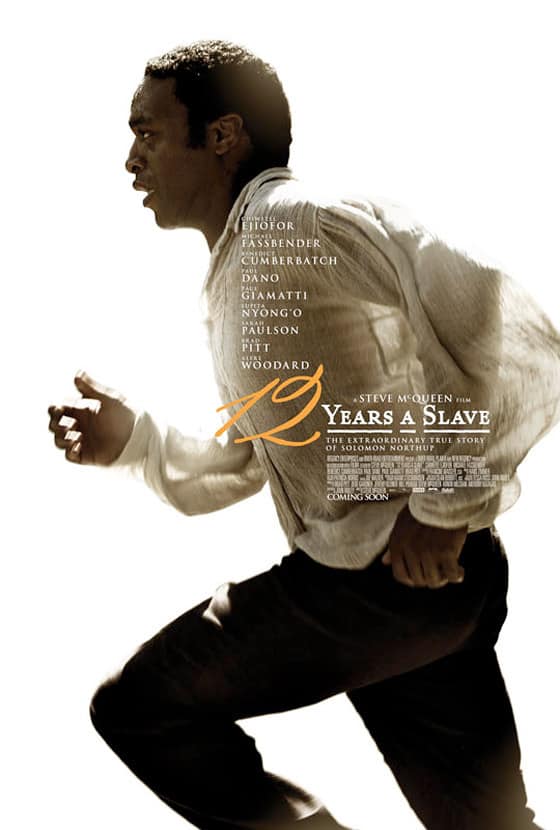
It’s pretty safe to say, and has been since around September, that Steve McQueen’s 12 Years A Slave will be nominated in almost every significant category because significant is exactly what this movie is. It’s a sometimes brutal and demanding depiction of slavery with some hard to watch moments but it’s an extraordinary film which looks set to pick up many awards and deservedly so. It’s a masterpiece and will probably win Best Picture and possibly Best Actor and Supporting Actor Chiwetel Ejiofor and Michael Fassbender respectively.
If you want something a little less demanding (some may say less depressing), then American Hustle is probably best for you. It’s another front runner and is definitely worth trying to see. It is, as the title suggests, all about con-men and women and it’s got a bit of everything in terms of comedy and drama. The performances from all the cast are excellent. We’d suggest that it will be this year’s film that gets loads of nominations but doesn’t convert them into wins, with the possible exception of the entire world’s current favourite person, Jennifer Lawrence, who may well win for best supporting actress. Her character has a lot of fun dancing to Live And Let Die and putting metal in the ‘science oven’ (microwave). Now that’s a fire hazard.

Those two films are probably the front runners (remember we don’t have the benefit of having seen the nominations yet) but the awards may be spread around this year. For instance, Gravity is more of a special effects oriented film but it’s likely to do very well throughout the awards season and there was a Best Director Golden Globe for its director, Alfonso Cuaron. Could he win the Oscar too?
It’s unlikely that many cinemas are still showing Gravity but look out for reruns of it because it is something to see on a big screen. Similarly, Cate Blanchett’s being hotly tipped to win Best Actress for Blue Jasmine, another film which was out months ago. But it may well be screened again soon at some cinemas, especially if she wins. On the other hand, a pair of nominees in the shape of Dallas Buyer’s Club and The Wolf Of Wall Street aren’t out yet, so look out for them too (TWOWS is released tomorrow).
That pretty much sums up the 2014 Oscars, before the nominations we’re even announced… possibly/probably. We’re going to look at some trendy indie cinemas tomorrow but we wanted to open the discussion on access at cinemas today.
What’s the access like at your local cinema? Have you ever had a problem?